Have you ever noticed a door in your home or office closing too quickly, slamming shut, or dragging so slowly that it barely latches? These issues are common and usually mean your door closer needs a little adjustment. Learning how to adjust hydraulic door closer speed is not as complicated as it sounds. With the right steps, you can make sure your door closes smoothly, safely, and at the right speed. Hydraulic door closers are built to control the swing and speed of a door. They’re especially common in commercial buildings, schools, and offices but are also found in homes. If you want to stop your door from slamming or make it close slower, all it takes is a screwdriver, a little patience, and some knowledge of how the closer works.
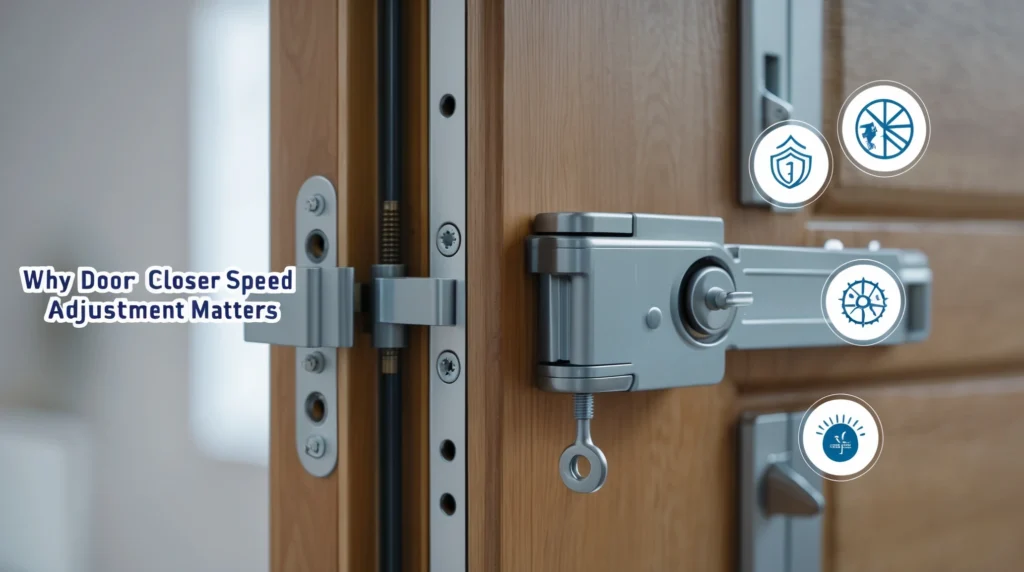
Why Door Closer Speed Adjustment Matters
Door closers play a bigger role than many people realize. They aren’t just there to make the door look neat. They control how the door opens, swings, and shuts. Without them, doors could slam hard, which can damage the frame, hurt someone, or create a loud and annoying sound.
Here’s why proper door closer adjustment matters:
- Safety – A slamming door can pinch fingers or cause injury.
- Energy efficiency – Doors that don’t close fully let air escape, raising heating and cooling bills.
- Convenience – Smoothly closing doors feel easier to use.
- Durability – A correctly adjusted closer reduces wear and tear on the door and frame.
If your door closing too fast or too slow, it means your closer needs adjustment. Luckily, with a few small changes, you can bring the speed back under control.
Common Problems Like Door Closing Too Fast or Too Slow
| Problem | Cause | Solution |
|---|---|---|
| Door closing too fast | Swing speed screw too loose | Tighten swing screw (clockwise) |
| Door closing too slow | Latch speed screw too tight | Loosen latch screw slightly |
| Door not closing all the way | Arm misalignment or low tension | Adjust arm angle / increase spring tension |
| Door slamming shut | Both screws set too loose | Turn both screws clockwise in small steps |
| Door hard to open | Tension set too high | Reduce spring tension gradually |
| Hydraulic fluid leaking | Worn-out closer body | Replace the hydraulic door closer |
Understanding Hydraulic Door Closer Adjustment Basics
A hydraulic door closer works by using fluid inside a cylinder. As the door opens and closes, the fluid slows down the motion, giving you control over the speed.
Most closers have two main screws:
- Swing Speed Screw – Controls how fast the door moves from fully open to about 10–15 degrees before closing.
- Latch Speed Screw – Controls the final movement of the door until it latches shut.
Some models also have extra features, such as:
- Backcheck – Prevents the door from opening too fast.
- Delay Action – Keeps the door open a little longer before it starts closing.
By adjusting these screws, you can control whether your door moves too fast, too slow, or just right.
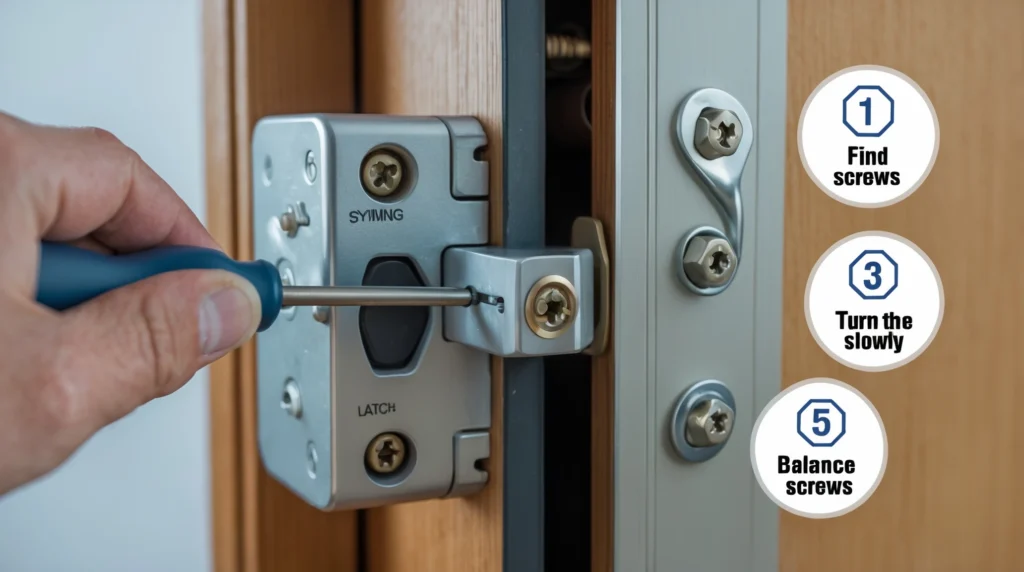
Step-by-Step: How to adjust hydraulic door closer speed
Here’s a simple guide to adjusting your closer:
- Find the screws – Look for small screws labeled “Swing,” “Latch,” or sometimes just marked with numbers.
- Use the right tool – Most closers use a flathead screwdriver.
- Turn slowly – Clockwise usually slows the door. Counterclockwise makes it faster.
- Test the door – After each small adjustment, open the door and let it close naturally.
- Balance both screws – Adjust swing speed first, then latch speed so the door doesn’t slam or stay open.
If your door still doesn’t close smoothly, check the door closer arm adjustment to ensure the arm isn’t loose or misaligned.
Using Door Closer Adjustment Screws the Right Way
The screws on a hydraulic closer are very sensitive. Turning them too much can cause problems.
- Quarter turns only – A small twist makes a big difference.
- Don’t overtighten – Forcing the screw can strip it or damage the closer.
- Check tension – If the door feels too heavy, use the adjust door closer tension setting (if available).
Remember: adjusting one screw can affect the other, so test carefully after each change.
Adjust Door Closer Tension and Arm Settings
Sometimes, the issue isn’t just with the speed screws. The tension spring and arm alignment also matter.
- Door closer arm adjustment – Make sure the arm is tight and set at the right angle.
- Adjust door closer tension – Some models have a spring tension screw. Loosen or tighten it based on how heavy the door feels.
If the tension is too high, the door will be hard to open. If it’s too low, it won’t close properly.
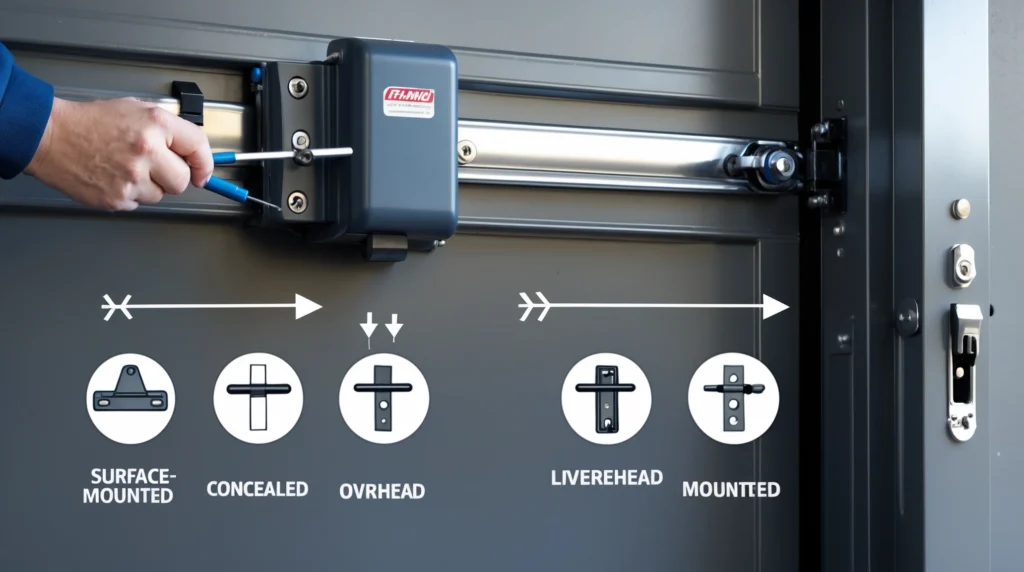
How to Adjust Closing Speed of Door Closer in Commercial Spaces
Commercial doors get a lot of use, so their closers need regular adjustments. If a heavy metal door is slamming or not latching, it may require stronger tension and fine-tuned door closer speed adjustment.
Steps for commercial closers:
- Identify whether it’s surface-mounted, concealed, or overhead.
- Adjust the hydraulic door closer adjustment screws carefully.
- Balance the swing and latch speeds for both safety and security.
Businesses often call professionals because commercial doors are heavier and require precise settings.
Special Cases: How to Adjust a Door Closer Pneumatic Model
Not all closers are hydraulic. Some are pneumatic door closers (often found on screen or storm doors). These work with air pressure instead of fluid.
To adjust them:
- Turn the screw on the cylinder to increase or decrease air pressure.
- If the door closes too fast, turn the screw clockwise.
- If it closes too slow, turn counterclockwise.
This is a simpler process, but the idea is the same control the speed for smoother operation.
Troubleshooting Tips: Fixing Door Closers Not Closing All the Way
Sometimes, adjustments aren’t enough. If your door closer not closing all the way, try these tips:
- Check the hinges – Loose hinges can affect door movement.
- Look for obstructions – Make sure nothing blocks the door.
- Inspect the closer – If it’s leaking fluid, it may need repair.
- Reset adjustments – Return screws to their middle position and try again.
If the problem continues, the closer may need replacement or professional repair.
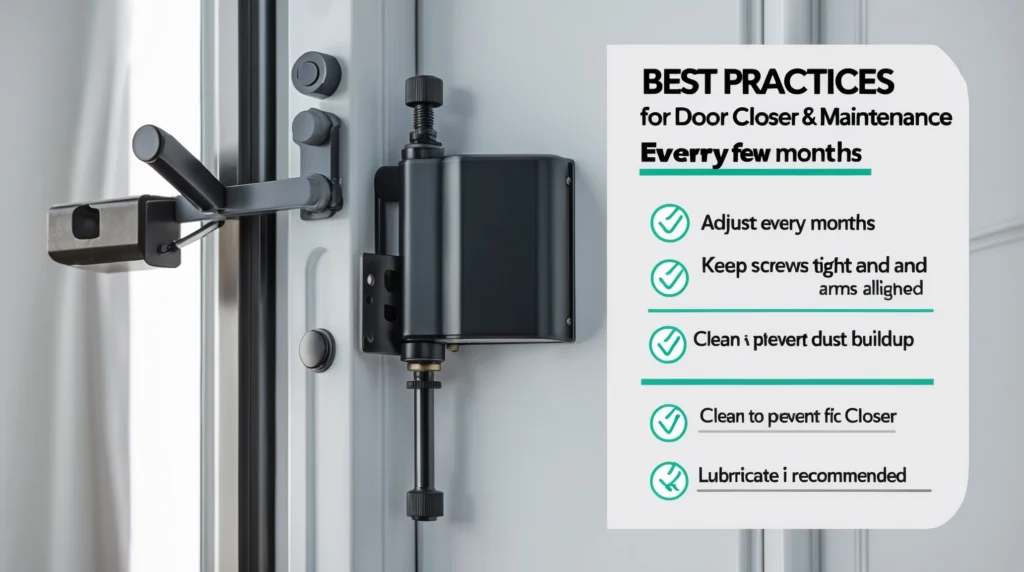
Best Practices for Door Closer Repair and Long-Term Maintenance
To keep your door closer working for years:
- Adjust it every few months or after seasonal changes.
- Keep screws tight and arms aligned.
- Clean around the closer to prevent dust buildup.
- Lubricate if the manufacturer recommends it.
Regular care prevents the need for expensive hydraulic door closer repair later on.
Professional Help in Spokane, WA: Trust five window install spokane
While adjusting a closer can be a DIY project, sometimes it’s best to call a professional. If your closer is leaking, broken, or just won’t adjust properly, a trained technician can fix or replace it quickly. In Spokane, WA, homeowners trust Five Window Install Spokane not only for windows but also for reliable door solutions. With expert service and years of experience, they ensure your doors and windows work smoothly and efficiently.
Conclusion
Learning how to adjust hydraulic door closer speed is a simple but valuable skill. By making small changes to the adjustment screws and checking the arm tension, you can fix common problems like doors closing too fast, too slow, or not closing at all. Regular maintenance keeps your door safe, secure, and easy to use. If your closer still doesn’t work after adjustments, it might be time to call in professional help. A skilled technician can repair or replace it, saving you time and frustration. For homeowners and businesses who want doors that close smoothly, safely, and quietly, the right adjustment makes all the difference.
If your door is slamming or refusing to latch properly, don’t wait until it becomes a bigger issue. Call the experts at Five Window Install Spokane today and enjoy smoother, quieter, and safer doors tomorrow.